
Criminal Mischief Lawyer In Orange, TX
Criminal mischief is the Texas charge for damaging or destroying someone else's property. A kicked-in door after an argument and a vandalized church are charged under the same statute, at very different levels, and this page covers the elements, penalties and defenses.
What Is Criminal Mischief In Texas?
Criminal mischief under Texas Penal Code § 28.03 means intentionally or knowingly damaging, destroying, tampering with or marking another person's tangible property without the owner's effective consent. The dollar amount of the loss, and sometimes the type of property, sets the grade, from a Class C misdemeanor under $100 to a first degree felony at $300,000 or more.
Source: Texas Penal Code Chapter 28, Arson, Criminal Mischief and Other Property Damage
Understanding Texas Law
How Does Texas Law Define Criminal Mischief?
Criminal mischief, under Texas Penal Code § 28.03, is committed when a person, without the owner's effective consent, intentionally or knowingly does one of three things:
- Damages or destroys the owner's tangible property
- Tampers with the property and causes pecuniary loss or substantial inconvenience to the owner or a third person
- Makes markings on the property, including inscriptions, slogans, drawings or paintings
The mental state matters. Damage caused by accident, or by carelessness alone, does not meet the "intentionally or knowingly" requirement.
What the state must prove beyond a reasonable doubt:
- The person did one of the three acts above
- The property belonged to someone else, or someone else also had an interest in it
- The owner did not give effective consent
- The person acted intentionally or knowingly
- The loss fits the dollar range charged
Some of these cases start at home. A broken phone, a smashed windshield or a punched wall after an argument is often charged as criminal mischief, sometimes next to an assault or family violence charge from the same night. Section 28.05 closes the "it is my property too" argument when someone else also has an interest in it.

Penalties And Consequences
What Are The Penalties For Criminal Mischief In Texas?
The ladder in § 28.03(b) tracks the theft statute. The type of property can push a low dollar loss into felony range. These are statutory limits, not predictions.
Fine only, up to $500.
180 days to two years and up to a $10,000 fine.
- Under $100
- Class C misdemeanor. Fine only, up to $500.
- $100 to under $750
- Class B misdemeanor. Up to 180 days in county jail and a $2,000 fine.
- $750 to under $2,500
- Class A misdemeanor. Up to one year in county jail and a $4,000 fine. Also Class A, whatever the amount, when the conduct impairs or interrupts a public water supply. Interfering with public communications, transportation or gas service is a state jail felony when the loss is under $30,000, and interfering with the public power supply is a third degree felony.
- $2,500 to under $30,000
- State jail felony. 180 days to two years and up to a $10,000 fine.
- $30,000 and above
- Third degree felony to $150,000, second degree to $300,000, and first degree at $300,000 or more.
- Special property
- State jail felony at lower dollar amounts for damage to a place of worship or human burial, a public monument, or a community center, and for a habitation damaged with a firearm or explosive weapon.
- Restitution
- The court can order payment to the owner as part of a sentence under Code of Criminal Procedure art. 42.037.
A conviction is a public record, and a felony conviction carries lasting effects beyond the sentence itself.
Real Questions
What Do People Ask About Criminal Mischief In Texas?
What counts as tampering?
Does a rental or leased property count as someone else's property?
What if the damage happened during a fight?
How does a repair estimate affect the case?
Possible Defenses
How Can Criminal Mischief Be Defended?
The state has to prove each element, and the most contested ones are intent, ownership and the amount of damage. An attorney reviews photographs, estimates and statements to see where the facts and the charge do not line up. No result can be promised.
Paying the owner does not bind the prosecutor, but restitution can be part of a plea or a pretrial agreement, and it may affect how a case ends.
Evidence and constitutional issues.
Photographs, a repair invoice and the owner's statement make up much of the file. Video and witness accounts may show who was present. If police made an arrest, the stop, any search and any statement can be reviewed for compliance with the Constitution and Texas law.
A criminal mischief charge that ends in dismissal can be removed through an expunction. Outcomes like deferred adjudication may allow a later nondisclosure.
Intent
Was the damage an accident, or can the state show the person acted intentionally or knowingly?
Identity
Who caused the damage, and is there video or a witness who saw it?
Ownership And Consent
Did the owner or another person with a right to the property give permission?
The Loss Figure
Is the estimate based on a real invoice, and does it include damage that was already there?
Property Type
Was the property actually a place of worship, monument or other category that lowers the felony threshold?
Related Charges
Is this case tied to an assault or family violence charge that affects bond, evidence or strategy?
Local Process
What Happens After A Criminal Mischief Arrest In Orange County?
The level of the loss decides which court hears the case. A Class C starts with a citation, and a felony starts with a grand jury.
Arrest Or Citation
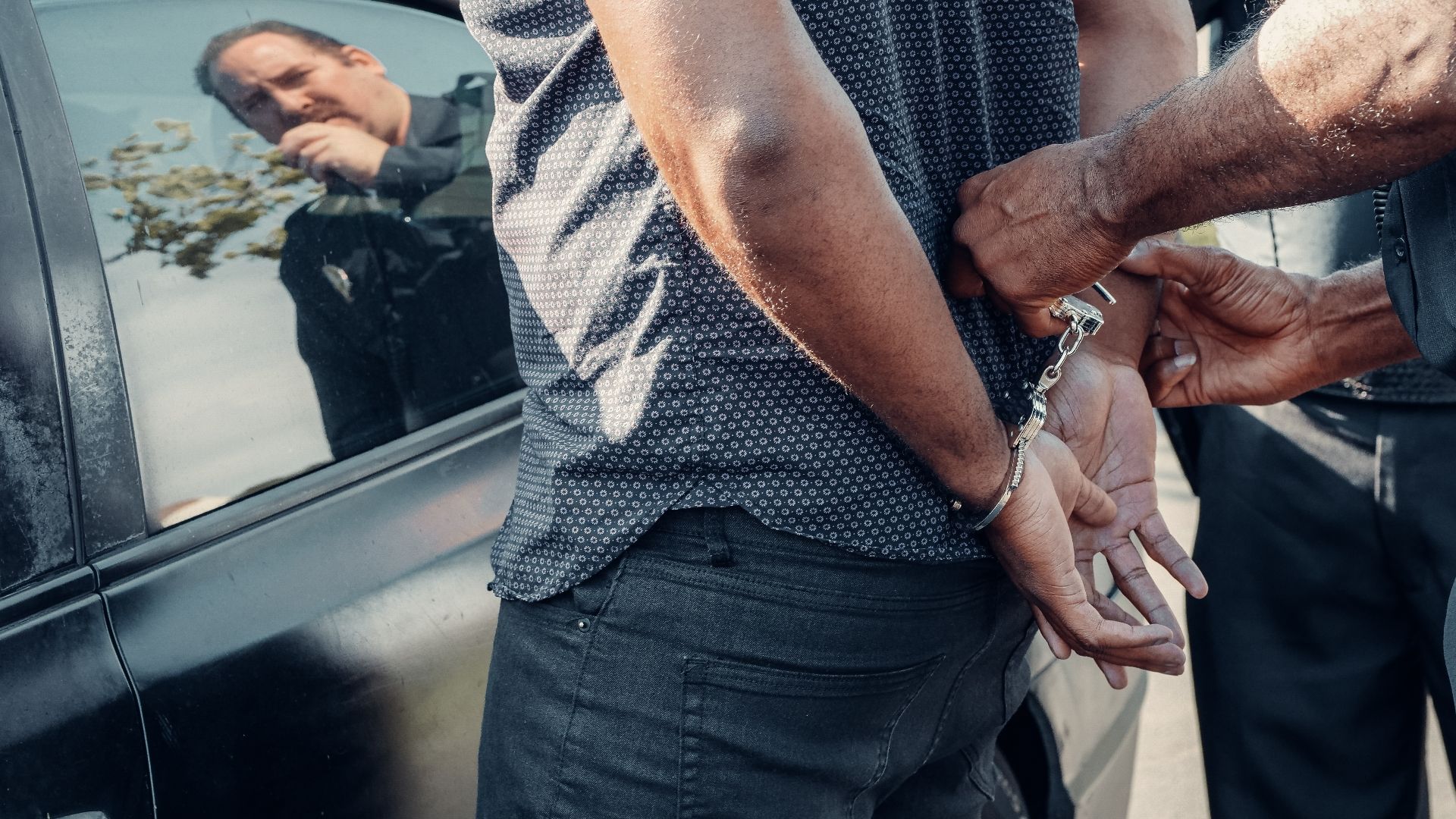
An officer takes a report, photographs the damage and talks to the owner. A lower dollar case may be a citation, and a higher one a booking.
Filing And Bond
A magistrate sets bond. The prosecutor files a complaint and information for a misdemeanor, or presents a felony to a grand jury.
Evidence And Resolution
The defense reviews photographs and estimates and requests the state's evidence. The case can end in dismissal, a plea, supervision, restitution terms or a trial.
- Where it is filed
- Class A and B cases in one of the Orange County Courts at Law. Felony cases go to one of the county's district courts: 128th District Court, 163rd District Court, and 260th District Court. Class C cases are heard in a justice of the peace or municipal court.
- Who prosecutes
- The Orange County District and County Attorney's Office.
- Who makes the arrest
- Orange Police Department, Orange County Sheriff's Office, Texas DPS Highway Patrol, Vidor Police Department, Bridge City Police Department, Pinehurst Police Department, or West Orange Police Department.
- Where you are booked
- The Orange County Correctional Facility at 205 S Border Street.
- If the case is appealed
- The Ninth Court of Appeals in Beaumont.
Next Steps
What Should You Do After A Criminal Mischief Charge?
These steps are general information, not advice for any one person.
Do Not Contact The Owner
If the owner is a family member, a bond condition may bar contact. Ask before reaching out.
Photograph The Property
Pictures of the property and any earlier damage can matter to the dollar figure.
Keep Estimates And Invoices
Save any repair quotes or papers the owner or an insurer sends.
Write Down Who Was Present
Names of witnesses and where they were can be hard to recover later.
Stay Off Social Media
Posts and messages about the incident can be used as evidence.
Ask Before Offering Payment
Payment can affect how a case is resolved. Ask how before making an offer.
A lawyer can look at how the loss figure was reached and what the charge actually requires. Mitchell Law Firm offers a confidential conversation about criminal mischief charges in Orange County.
Official Texas Sources
Read The Law Behind This Page
- Texas Penal Code Chapter 28: Criminal mischief, loss measurement and graffiti
- Texas Penal Code Chapter 12: Punishment classes and ranges
- Texas Penal Code Chapter 6: Culpable mental states
- Texas Code of Criminal Procedure Chapter 42: Judgment, sentence and restitution
- Texas Code of Criminal Procedure Chapter 39: Discovery of the state's evidence
- Texas Code of Criminal Procedure Chapter 55A: Expunction of criminal records

Who Handles Your Case
The Texas Lawyer Who Speaks Science
Attorney Brennon Mitchell isn't just a seasoned Orange trial lawyer. He's one of the few in Texas, and the entire country, to earn the prestigious title of an ACS-CHAL Forensic Lawyer-Scientist. That means he's gone beyond the courtroom and into the laboratory, receiving in-depth, hands-on training in forensic chromatography, the same kind of testing used by crime labs to try and convict Texans every day.
What does that mean for you?
It means when the state uses blood alcohol or drug testing to try to prove its case, Mr. Mitchell knows how to challenge it. He's trained to:
- Analyze lab results and spot faulty science
- Cross-examine forensic experts with precision
- Break down complex chemical evidence in plain language for juries
This is not the kind of background you find in most criminal defense attorneys, and it could make the difference between a conviction and a clean slate.
Brennon graduated from Texas A&M University School of Law and practices from offices in Orange and Conroe.
Client Reviews
What Clients Say About Brennon Mitchell
Prior results do not guarantee a similar outcome. Every case is different and is decided on its own facts.
Related Topics
Other Criminal Charges Handled In Orange, TX
Property damage charges are often filed alongside other offenses from the same incident. See the full criminal defense overview for Orange.
Other Criminal Charges
Property, weapons, and public order offenses that sit outside the main categories.
Probation And Sentencing
What a sentence can look like, and what happens when the terms of one are challenged.
Records And Defense
How a case can come off, or be shielded on, a record, and the defense tools the law provides.
Common Questions
Criminal Mischief Questions People In Orange Ask
What is criminal mischief in Orange, TX?
Criminal mischief under Texas Penal Code § 28.03 is damaging or destroying someone else's tangible property, tampering with it in a way that causes loss or substantial inconvenience, or marking it with paint or inscriptions, all without the owner's effective consent. The charge ranges from a Class C misdemeanor for a loss under $100 up to a first degree felony at $300,000 or more.
Can I be charged with criminal mischief for damaging property I co-own in Orange County?
Texas Penal Code § 28.05 provides that it is not a defense that the person charged has an interest in the property, if another person also has an interest the person charged is not entitled to infringe. Damage to a shared home or a jointly titled vehicle can therefore support a criminal mischief charge when the other owner did not consent.
How is the amount of damage calculated in an Orange, TX criminal mischief case?
Section 28.06 sets the measure. For property destroyed, it is fair market value at the time and place of the damage, or replacement cost if market value cannot be found. For property damaged, it is the cost of repairing or restoring it within a reasonable time. The number the state alleges is an element it has to prove, and repair estimates can be challenged.
Does restitution end a criminal mischief case in Orange County?
Paying for the damage does not by itself end a criminal case, because the prosecutor, not the property owner, decides whether to proceed. Article 42.037 of the Code of Criminal Procedure allows a court to order restitution as part of a sentence, and restitution can also be a condition of community supervision, deferred adjudication or a pretrial agreement where one is offered.
Is graffiti charged as criminal mischief in Orange, TX?
Marking property with inscriptions, slogans, drawings or paintings is covered by § 28.03, and Texas also has a separate graffiti statute, § 28.08, for markings made with paint, an indelible marker or an etching device. The graffiti statute uses its own value ladder and allows the court to require community service and restitution.
Can accidental damage be criminal mischief in Orange County, TX?
The statute requires that the person acted intentionally or knowingly. Damage caused by an accident or by carelessness alone does not meet that requirement. The state has to prove the person meant to cause the damage or knew it was reasonably certain to happen, which is often shown through the person's words, conduct and the way the damage occurred.
Mitchell Law Firm, PLLC
The Dollar Figure Can Be Challenged
The value alleged sets the level of the charge. A defense attorney can look at how that figure was reached before anything is decided.
Orange Office




