
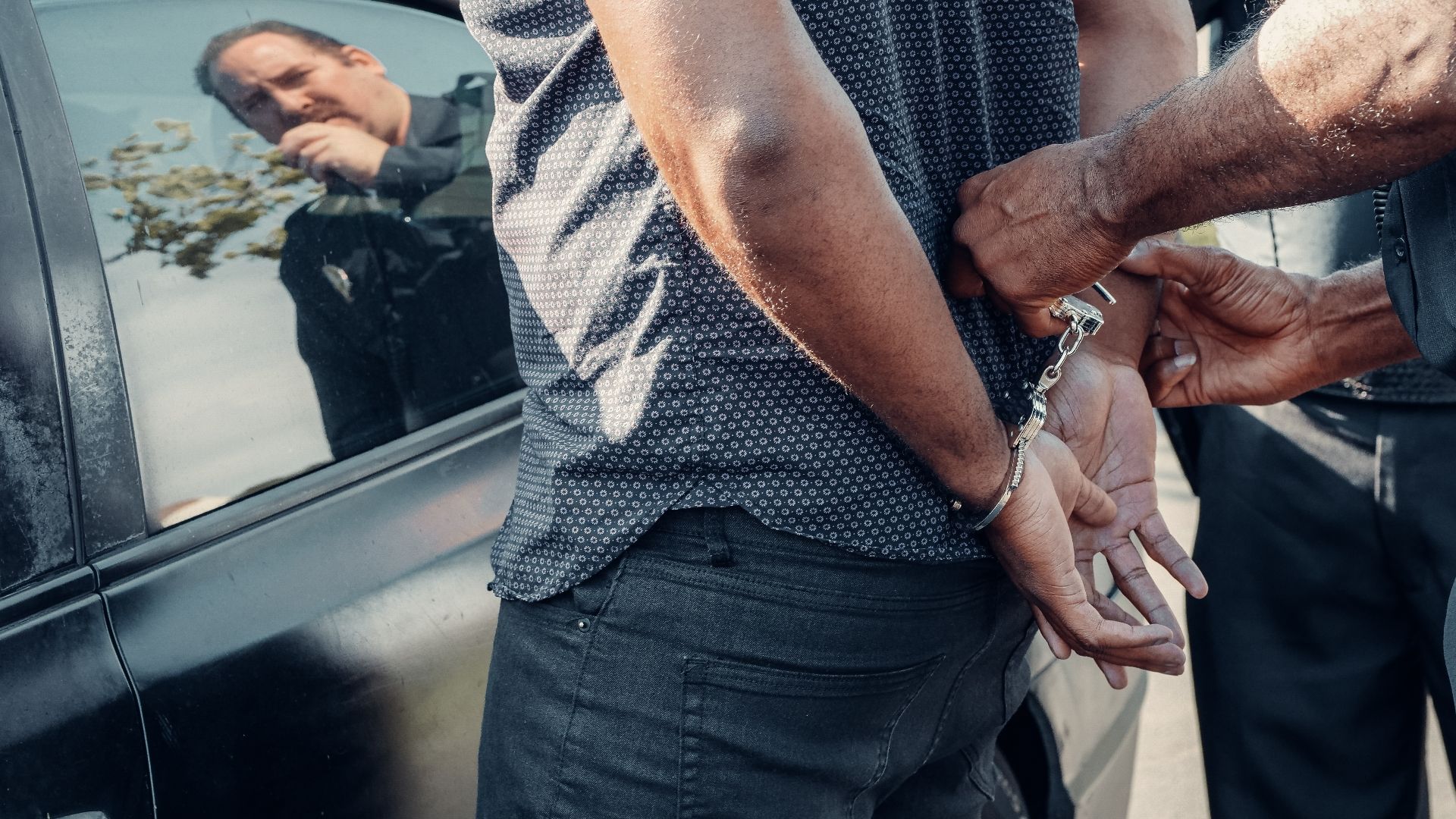
DWI Lawyer In Orange, TX
A DWI arrest in Orange County starts two cases at once: a criminal case in the county courts and a license case with the Texas Department of Public Safety. This page covers the law, penalties, defenses and process.
What Is DWI In Texas?
Driving while intoxicated in Texas means operating a motor vehicle in a public place while intoxicated. Penal Code § 49.01 defines intoxicated as a 0.08 alcohol concentration or loss of the normal use of mental or physical faculties. A first offense is a Class B misdemeanor. A DWI arrest starts a criminal case and a separate license case with a 15 day deadline.
Source: Texas Penal Code Chapter 49, Intoxication and Alcoholic Beverage Offenses
Understanding Texas Law
How Does Texas Law Handle A DWI Arrest?
A DWI arrest in Orange County opens a criminal case and a license case on the same day. They are run by different agencies, decided by different people, and they do not wait for each other.
The criminal case is prosecuted by the Orange County District and County Attorney's Office. It decides whether there is a conviction and what the sentence is. The county has one combined prosecutor's office, so the same office handles a first offense misdemeanor and a felony intoxication manslaughter.
The license case is administrative. The Texas Department of Public Safety starts it, and the State Office of Administrative Hearings hears it. A hearing has to be requested within 15 days of arrest, or the suspension takes effect on day 40. The ALR hearing page covers that process in full.
Intoxicated has two legal meanings:
- A blood, breath or urine result of 0.08 or more
- Loss of normal use of mental or physical faculties from alcohol, drugs or any other substance, with no number required
That second definition is why a DWI can be charged after a low breath result, or after a blood test that finds only a prescription medication. The drug DWI page covers those cases. Each definition has its own evidence behind it, from an instrument or lab for the number, and from driving behavior and field sobriety and breath tests for the faculties theory.
A win in one case does not end the other. A dismissed criminal charge does not undo a license suspension already in effect, and a lost ALR hearing does not decide guilt.

Penalties And Consequences
How Does Texas Grade DWI Penalties?
Texas law sets the level of a DWI by three things: the driver's prior record, the alcohol concentration, and what happened on the road. The base offense is in Penal Code § 49.04. The enhancements are in § 49.09, and the separate injury and child offenses have their own sections. These are statutory limits, not predictions.
Up to $4,000 for a Class A.
- First DWI
- Class B misdemeanor, 72 hours to 180 days in jail and a fine up to $2,000. See first DWI.
- Result of 0.15 or higher
- Class A misdemeanor on a first offense, up to one year in jail and a fine up to $4,000.
- One prior conviction
- Class A misdemeanor, 30 days to one year in jail and a fine up to $4,000.
- Two prior convictions
- Third degree felony, two to ten years in prison and a fine up to $10,000.
- Passenger younger than 15
- State jail felony, 180 days to two years in a state jail facility, on any offense including a first.
- Serious bodily injury to another
- Intoxication assault, a third degree felony, with higher levels for certain victims.
- A death
- Intoxication manslaughter, a second degree felony, two to twenty years in prison.
The line between a misdemeanor and a felony changes nearly everything about the case: the court, the bond, the possible sentence and the long term record. The felony DWI page explains each route across that line.
Real Questions
What Do People Ask About DWI In Texas?
Does a prior DWI ever expire?
Can I be charged with DWI for prescription drugs?
What if I refused the breath or blood test?
Does a DWI affect my job or professional license?
Possible Defenses
How Can A DWI Charge Be Defended?
A DWI case is built from several pieces of evidence, and each can be tested. An attorney reviews the stop, the roadside tests, the video, the specimen and the paperwork to see what the state can prove and where the facts do not line up. No result can be promised.
The outcomes the Texas system provides include dismissal, reduction to a lesser offense, a plea to the charge with community supervision or jail, deferred adjudication in eligible misdemeanor cases, and trial before a judge or jury. Which of those is available depends on the charge level, the record and the evidence.
Each charge level has its own page.
Different DWI charges raise different issues. A first DWI turns on the stop and the testing. A third DWI turns on the prior judgments. Injury and death cases turn on causation and medical evidence.
The DWI court process page walks through the criminal side stage by stage.
The Stop
Was there a lawful reason to stop or detain the driver?
The Roadside Tests
Were field sobriety tests given and scored the way the manual requires?
Operating The Vehicle
Can the state show the person was operating a vehicle in a public place?
The Specimen
Was the breath or blood sample collected, stored and tested correctly?
The Priors
If a prior is alleged, is the judgment final and does it qualify?
The License Case
What should be done at the ALR hearing, and when?
Local Process
What Happens After A DWI Arrest In Orange County?
The steps below are the same statewide. The court, the prosecutor and the jail are the parts specific to Orange County.
Booking And Magistrate
After arrest, a person is booked and brought before a magistrate, who explains the charge and sets bond.
The ALR Window
A hearing request has to be made within 15 days to protect the license.
Charging
A misdemeanor is commonly charged by an information. A felony goes to a grand jury.
Evidence And Resolution
The defense asks for the state's evidence, and the case moves toward dismissal, a plea or trial.
- Booking
- The Orange County Correctional Facility at 205 S Border Street, for every agency in the county.
- Who arrests
- Orange Police Department, Orange County Sheriff's Office, Texas DPS Highway Patrol, Vidor Police Department, Bridge City Police Department, Pinehurst Police Department, or West Orange Police Department.
- Where a misdemeanor goes
- Filed in one of the Orange County Courts at Law, commonly by a charging document called an information.
- Where a felony goes
- Presented to a grand jury, then tried in the Orange County Courthouse at 801 W Division St before one of the district courts: 128th District Court, 163rd District Court, and 260th District Court.
- License case
- Before the State Office of Administrative Hearings.
- If the case is appealed
- The Ninth Court of Appeals in Beaumont.
Next Steps
What Should You Do After A DWI Arrest?
The first days after an arrest matter, mostly because deadlines start on their own. These steps are general information, not advice for any one person.
Count 15 Days
Find the date on the notice of suspension and protect the ALR hearing request.
Keep The Paperwork
Save every document from the arrest, the bond and the court.
Write It Down
Record what happened while memories are fresh.
Stay Off Social Media
Do not post about the arrest or the case.
Check Reporting Duties
Some jobs and licenses require notice soon after an arrest.
Do Not Rely On The Number
A test result is one piece of evidence, not the whole case.
Talk to a lawyer before deciding what to do. Many people plead or let the license deadline pass because they assume nothing can be done, and neither choice can be undone. Mitchell Law Firm offers a confidential conversation about a DWI charge in Orange County. Calling early keeps the most options open.
Official Texas Sources
Read The Law Behind This Page
- Texas Penal Code Chapter 49: DWI offense, definitions and enhancements
- Texas Penal Code Chapter 12: misdemeanor and felony punishment
- Texas Transportation Code Chapter 524: administrative license suspension and the ALR hearing
- Texas Transportation Code Chapter 724: implied consent and test refusals
- Texas Code of Criminal Procedure Chapter 15: arrest and magistrate warning
- Texas Code of Criminal Procedure Chapter 42A: community supervision
- Texas Department of Public Safety: Administrative License Revocation program

Who Handles Your Case
The Texas Lawyer Who Speaks Science
Attorney Brennon Mitchell isn't just a seasoned Orange trial lawyer. He's one of the few in Texas, and the entire country, to earn the prestigious title of an ACS-CHAL Forensic Lawyer-Scientist. That means he's gone beyond the courtroom and into the laboratory, receiving in-depth, hands-on training in forensic chromatography, the same kind of testing used by crime labs to try and convict Texans every day.
What does that mean for you?
It means when the state uses blood alcohol or drug testing to try to prove its case, Mr. Mitchell knows how to challenge it. He's trained to:
- Analyze lab results and spot faulty science
- Cross-examine forensic experts with precision
- Break down complex chemical evidence in plain language for juries
This is not the kind of background you find in most criminal defense attorneys, and it could make the difference between a conviction and a clean slate.
Brennon graduated from Texas A&M University School of Law and practices from offices in Orange and Conroe.
Client Reviews
What Clients Say About Brennon Mitchell
Prior results do not guarantee a similar outcome. Every case is different and is decided on its own facts.
DWI Charges
DWI Charges We Handle In Orange
First, Repeat And Felony DWI
Priors never expire in Texas, and a second or third charge moves the case into a different range entirely.
Drug And Substance DWI
You do not need alcohol to be charged. Prescriptions and legal hemp products lead to DWI arrests in Orange County.
The Driver And The Vehicle
Age, license type, home state, and what was being operated all change where the same stop leads.
Your License And The Process
The evidence, the deadlines, and what a conviction reaches beyond the courtroom.
Health Care Licenses
Boards that license patient care run their own review of an alcohol arrest, separate from the court.
Other Professional Licenses
Law, finance, aviation, teaching, real estate, and security work each answer to their own board or agency.
Common Questions
DWI Questions People In Orange Ask
Is a DWI a felony or a misdemeanor in Orange, TX?
It depends on the record and the facts. A first or second DWI is a misdemeanor under Texas Penal Code §§ 49.04 and 49.09(a). A third DWI is a third degree felony, and so is intoxication assault. DWI with a passenger younger than 15 is a state jail felony, and intoxication manslaughter is a second degree felony. Felony cases in Orange County are heard in the district courts.
How far back can an old DWI be used against me in Orange County?
Texas has no lookback period for enhancing a DWI charge. Under Penal Code § 49.09, a prior DWI conviction from any year can raise a new charge to a Class A misdemeanor, and two priors can make it a felony. A deferred adjudication for DWI granted on or after September 1, 2019 is treated as a prior conviction for this purpose.
What is the difference between the ALR case and the criminal DWI case in Orange?
The criminal case decides guilt and punishment and is prosecuted by the county's District and County Attorney. The ALR case is an administrative proceeding over the driver's license, brought by the Texas Department of Public Safety and heard by the State Office of Administrative Hearings. Each has its own deadlines, its own standard of proof and its own outcome.
Can a DWI in Orange, TX be based on drugs instead of alcohol?
Texas defines intoxicated to include the loss of normal mental or physical faculties from alcohol, a controlled substance, a drug, a dangerous drug, or any combination of them. A prescription taken as directed is not excluded by the statute. Drug cases turn on blood analysis and officer observations, since there is no per se legal limit for most drugs.
What outcomes exist for a DWI case in Orange County?
The outcomes the Texas system provides include dismissal, reduction to a lesser offense, a plea to the charge with community supervision or jail, deferred adjudication in eligible misdemeanor cases, and trial before a judge or jury. Which of those is available in a given case depends on the charge level, the record and the evidence.
Mitchell Law Firm, PLLC
Your Freedom Is Our Fight
The license deadline starts when the notice of suspension is received. Call or request a consultation while every option is still open.
Orange Office




