
Drug Charge Information For Montgomery County
After a drug arrest in Montgomery County, the case passes through the county jail, a magistrate, a crime laboratory and one of two court buildings. This page walks through that order, how drugs are tested and weighed, how searches are challenged and what outcomes the system allows.
What Happens After A Drug Arrest In Texas?
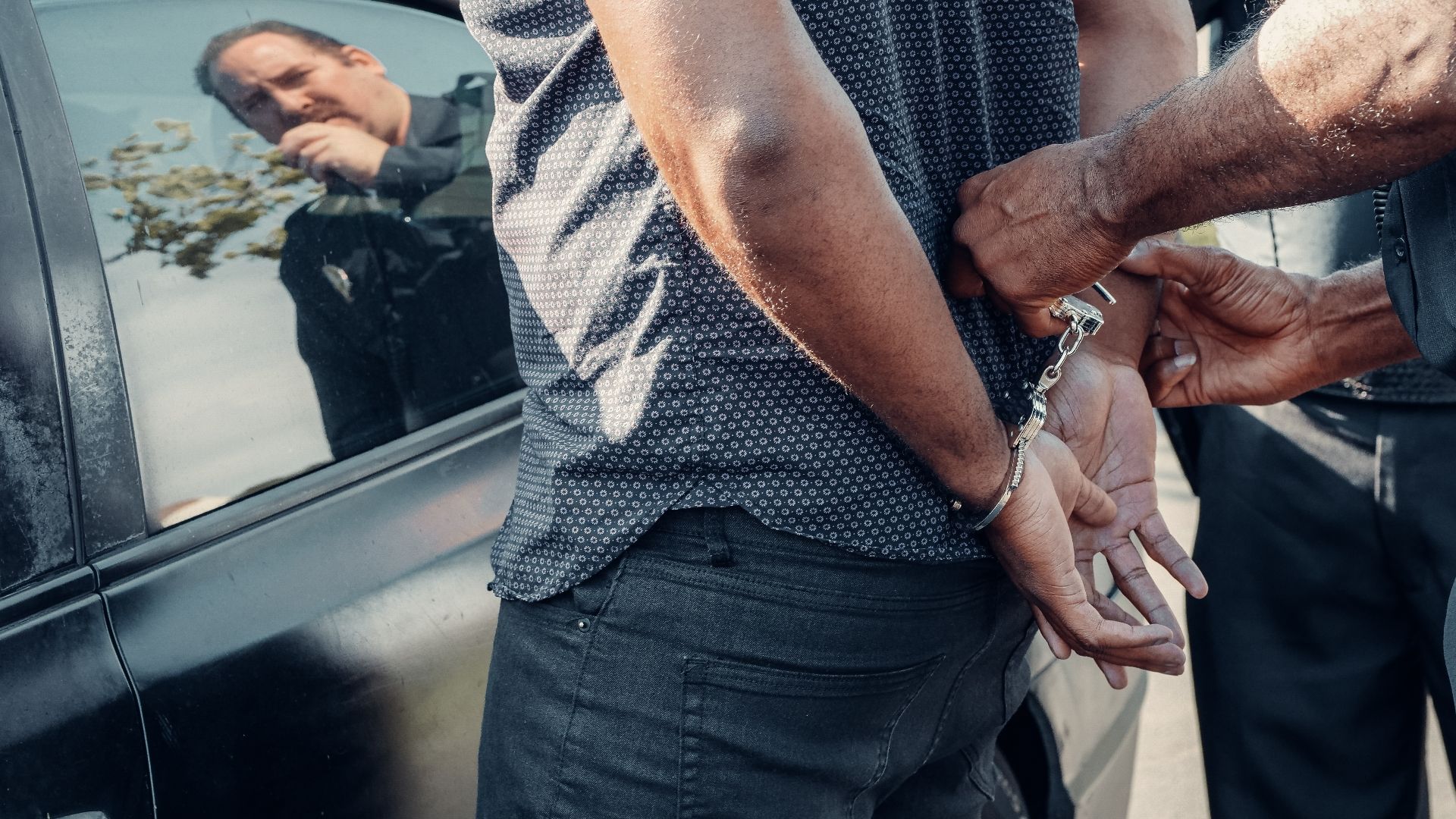
After a drug arrest, the person is booked and taken before a magistrate within 48 hours under Code of Criminal Procedure art. 15.17, who sets bail. The substance goes to a crime laboratory for identification and weighing. The prosecutor then files a misdemeanor or presents a felony to a grand jury, and discovery begins.
Source: Texas Code of Criminal Procedure Article 15.17, Duties of Arresting Officer and Magistrate
The Crime Lab
How Are Drugs Tested And Weighed In A Texas Case?
A field kit screens. The charge rests on confirmatory testing at an accredited laboratory, which uses instrumental methods, such as gas chromatography paired with mass spectrometry, to identify the substance. The analyst then weighs it, and the result is reported with a measurement uncertainty.
For most substances the weight is aggregate weight, so cutting agents, the liquid in a cartridge and the binder in a pressed pill all count. The container does not. When a result sits close to a line such as one gram or four grams, that uncertainty can decide the level of the charge.
For marijuana, identification is not enough. Since 2019 Texas has defined hemp as cannabis with no more than 0.3 percent delta-9 THC on a dry weight basis, so a marijuana case needs the concentration measured, not just THC detected.
What the lab file holds and what can be examined:
- The instrument data behind the identification, not only the one-line result
- Balance calibration and the uncertainty reported with the weight
- Whether packaging was excluded from the weight
- The chain of custody from seizure to analysis
- For marijuana, whether THC concentration was measured
The tiers each weight maps to are on the penalty groups page.

Penalties And Consequences
What Does The Lab Result Decide In A Texas Drug Case?
The identification sets the penalty group and the weight sets the tier. Together they set the range. These examples show how that works, and the ranges are statutory limits, not predictions. Full tables are on the penalty groups page.
- Penalty Group 1, under 1 gram
- State jail felony for possession: 180 days to 2 years and up to a $10,000 fine.
- Penalty Group 1, 1 to 4 grams
- Third degree felony for possession: 2 to 10 years. A single gram can change the level.
- Marijuana, 2 ounces or less
- Class B misdemeanor: up to 180 days and a $2,000 fine.
- Penalty Group 3, under 28 grams
- Class A misdemeanor for possession: up to one year and a $4,000 fine.
- Delivery
- Graded above possession at the same weight. See the drug distribution page.
For example, a lab reporting 0.97 grams and one reporting 1.03 grams of the same Group 1 substance point to different felony levels. That is why the uncertainty and the net weight calculation get a close look. This is an illustration, not a real case.
Real Questions
What Do People Ask About Drug Arrests In Texas?
Do I have to take a drug test after an arrest?
Can I be charged before the lab reports?
What is bond, and how is it set?
Can a drug case end without a conviction?
The Search
How Are Searches And Seizures Challenged In A Drug Case?
Drugs are only usable as evidence if they were found lawfully. The Fourth Amendment and Article I, § 9 of the Texas Constitution require a warrant, consent or a recognized exception, and Code of Criminal Procedure art. 38.23 excludes evidence obtained in violation of state or federal law.
The wider set of challenges is on the defense strategies page.
Outcomes the system allows.
A drug case can end in dismissal, reduction, a plea, deferred adjudication, a pretrial program where one accepts the case, or trial. Deferred adjudication ends without a conviction when completed.
The Reason For The Stop
What lawful basis did officers have to stop or hold the person?
Consent
Did the person actually agree to the search, or did officers assume it?
The Warrant
Did the warrant describe the place and rest on a sound affidavit?
Lab Accreditation
Was the analysis done by an accredited lab, as art. 38.35 generally requires?
The Certificate
Was the analyst's certificate filed on time, and was it timely contested?
The Custody Log
Does the log show every handoff of the seized substance?
Local Process
What Happens After A Drug Arrest In Montgomery County?
Every drug arrest in Montgomery County ends at the same place, whichever agency made it: the Montgomery County Jail, run by the Montgomery County Sheriff's Office. Roughly 1,100 beds, with a daily population that regularly runs over a thousand. Sheriff's Office headquarters sits at the same address.
The case then splits into two tracks that run at once. One is the person: magistration, bail and release. The other is the evidence: the substance goes to a lab and the offense report goes to a prosecutor. Montgomery County hears misdemeanors and felonies in different buildings in Conroe, so the level of the charge decides where the first setting happens. Felonies are heard at the Montgomery County Criminal Justice Center at 207 W Phillips St. Misdemeanors sit in a separate courthouse, and the setting notice names the court.
Booking
Fingerprints, photographs and a property inventory at the county jail.
Magistration
The magistrate gives the statutory warnings, notes any request for appointed counsel and sets bail using the factors in art. 17.15.
Release On Bond
Cash, surety or personal bond, with any conditions the court attaches.
Lab Submission
The substance is identified and weighed, which fixes the penalty group and weight tier.
Charging
A misdemeanor is filed by information. A felony goes to a grand jury for indictment.
Discovery And Resolution
The state's file is produced under art. 39.14, motions are heard, and the case moves toward dismissal, a plea, a program, or trial.
- Who makes the arrest
- Conroe Police Department, Montgomery County Sheriff's Office, Texas DPS Highway Patrol, Montgomery County Constables, Precincts 1 through 5, Willis Police Department, Shenandoah Police Department, Oak Ridge North Police Department, Magnolia Police Department, Splendora Police Department, or Roman Forest Police Department.
- Where you are booked
- The Montgomery County Jail at 1 Criminal Justice Drive.
- Misdemeanor drug cases
- Filed in one of the Montgomery County Courts at Law and prosecuted by Montgomery County District Attorney's Office.
- Felony drug cases
- Reviewed by the Montgomery County District Attorney's Office, presented to a grand jury and heard in the district courts at the Montgomery County Criminal Justice Center on 207 W Phillips St.
- Lab analysis
- An accredited crime laboratory, as art. 38.35 generally requires for forensic evidence.
- If the case is appealed
- Appeals go to the Ninth Court of Appeals in Beaumont.
Next Steps
What Should You Do After A Drug Arrest?
What gets preserved and which options stay open is largely settled in the first weeks. This is general information, not advice for one person.
Get The Bond Terms
Read the conditions and meet every testing and reporting date.
Ask For The Evidence
Your lawyer can request the lab file, video and reports under art. 39.14.
Write Down The Search
Note where, when and how the drugs were found and who was there.
Track The Court Dates
Missing a setting can lead to a warrant and a bond problem.
Watch The Lab Date
The lab may report after the first setting. Ask what the charge will rest on.
Stay Off Social Media
Posts and messages about the case can be used as evidence.
Speak with a lawyer early, because court dates arrive before the lab finishes. Mitchell Law Firm offers a confidential conversation about a drug arrest in Montgomery County.
Official Texas Sources
Read The Law Behind This Page
- Texas Code of Criminal Procedure Chapter 15: arrest and magistrate warning
- Texas Code of Criminal Procedure Chapter 17: bail
- Texas Code of Criminal Procedure Chapter 38: evidence, including articles 38.23, 38.35 and 38.41
- Texas Code of Criminal Procedure Chapter 39: discovery
- Texas Health and Safety Code Chapter 481: penalty groups and weight tiers
- Texas Government Code Chapter 123: drug court programs
- Texas Department of Public Safety: crime laboratory services

Who Handles Your Case
The Texas Lawyer Who Speaks Science
Attorney Brennon Mitchell isn't just a seasoned Conroe trial lawyer. He's one of the few in Texas, and the entire country, to earn the prestigious title of an ACS-CHAL Forensic Lawyer-Scientist. That means he's gone beyond the courtroom and into the laboratory, receiving in-depth, hands-on training in forensic chromatography, the same kind of testing used by crime labs to try and convict Texans every day.
What does that mean for you?
It means when the state uses blood alcohol or drug testing to try to prove its case, Mr. Mitchell knows how to challenge it. He's trained to:
- Analyze lab results and spot faulty science
- Cross-examine forensic experts with precision
- Break down complex chemical evidence in plain language for juries
This is not the kind of background you find in most criminal defense attorneys, and it could make the difference between a conviction and a clean slate.
Brennon graduated from Texas A&M University School of Law and practices from offices in Orange and Conroe.
Client Reviews
What Clients Say About Brennon Mitchell
Prior results do not guarantee a similar outcome. Every case is different and is decided on its own facts.
Related Drug Charges
Other Drug Cases Handled In Conroe, TX
Once the lab reports, the case becomes a specific charge with its own rules and range. See the full Drug Crimes defense overview for Conroe.
Drug Possession
Knowing possession of a controlled substance, graded by penalty group and lab weight from a misdemeanor up to a first degree felony.
Drug Distribution
Manufacture, delivery and possession with intent to deliver, charged a level above possession once the weight passes the lowest tier.
Drug Conspiracy
Criminal conspiracy under Penal Code § 15.02 and engaging in organized criminal activity under § 71.02, built on agreements, messages and co-defendants.
Drug Diversion
Forged and altered prescriptions, deception of prescribers, and medication taken from workplace stock, charged mainly under § 481.129.
Juvenile Drug Crimes
Drug cases against children aged 10 through 16, heard in juvenile court under Title 3 of the Texas Family Code.
Internet Drug Crimes
Buying, selling or shipping controlled substances through websites, apps, social media or the mail.
Drug Crime Enhancements
Drug-free zones, deadly weapon findings, prior convictions and group allegations that move a drug charge up a level.
Drug Penalty Groups
The Texas penalty groups and their weight tiers for possession and delivery, gathered in one reference.
Drug Crime FAQ
Straight answers to the questions that follow a drug arrest in Montgomery County, tied to the Texas statutes.
Common Questions
Drug Arrest Questions People In Montgomery County Ask
Where are people arrested for drugs in Conroe, TX booked?
Arrests made anywhere in Montgomery County, whether by a city police department, a constable's office, the Sheriff's Office or state troopers, are booked into the Montgomery County Jail at 1 Criminal Justice Drive in Conroe. The jail is run by the Montgomery County Sheriff's Office, whose headquarters sits at the same address.
How soon does someone see a judge after a drug arrest in Montgomery County?
Code of Criminal Procedure art. 15.17 requires an arrested person to be taken before a magistrate without unnecessary delay and no later than 48 hours after arrest. The magistrate explains the accusation and the person's rights, including the right to request appointed counsel, and sets bail. For a felony drug charge, this first appearance comes before any grand jury indictment.
How long does the crime lab take in a Conroe, TX drug case?
Texas law sets no deadline for a crime laboratory to report, and turnaround depends on the lab's backlog and the testing required. Plant material that must be tested for THC concentration, and newer synthetic substances, can take more work than a routine identification. A grand jury can indict a felony drug case before or after the lab report arrives.
Can a field test alone support a drug conviction in Montgomery County?
A roadside test kit gives a presumptive result by reacting to a class of chemicals, and some lawful substances produce the same color change. Code of Criminal Procedure art. 38.35 generally requires forensic analysis offered in a criminal case to come from an accredited crime laboratory, so the charge rests on confirmatory testing rather than on the kit.
What happens to a felony drug case in Montgomery County before indictment?
After booking and magistration, a felony drug case goes to the Montgomery County District Attorney's Office, which decides whether to present it to a grand jury. The lab analysis, offense reports and recordings are gathered during that period. If the grand jury returns an indictment, the case is assigned to a district court for arraignment, and the defense can request the state's file under art. 39.14.
Can the lab analyst be required to testify in a Conroe, TX drug trial?
Code of Criminal Procedure art. 38.41 lets the state offer a lab certificate in place of the analyst's live testimony, and it also gives the defense the right to file a timely written objection. Once an objection is filed, the certificate cannot stand in for the analyst, who then has to appear and be cross-examined. The statute sets the deadlines for both steps.
Mitchell Law Firm, PLLC
Your Freedom Is Our Fight
The first weeks decide what evidence is preserved and requested. Call to go over where your case stands.
Conroe Office




