
Field Sobriety And Breath Tests In Conroe, TX
A Montgomery County DWI file can hold three kinds of test evidence: roadside tests on video, a breath result and a blood result, often drawn under a warrant after a refusal. This page explains how each one is produced, the rules it runs on and where the records can be checked.
What Are DWI Field, Breath And Blood Tests In Texas?
Texas DWI cases use three kinds of testing evidence. Standardized field sobriety tests are roadside balance and eye tests that an officer scores. Breath tests run on the Intoxilyzer 9000 under DPS rules. Blood tests are analyzed in a laboratory. Transportation Code Chapter 724 covers specimens, and Penal Code § 49.01 sets the 0.08 concentration the results are measured against.
Source: Texas Transportation Code Chapter 724, Implied Consent
At The Roadside
What Are Field Sobriety Tests, And What Do They Measure?
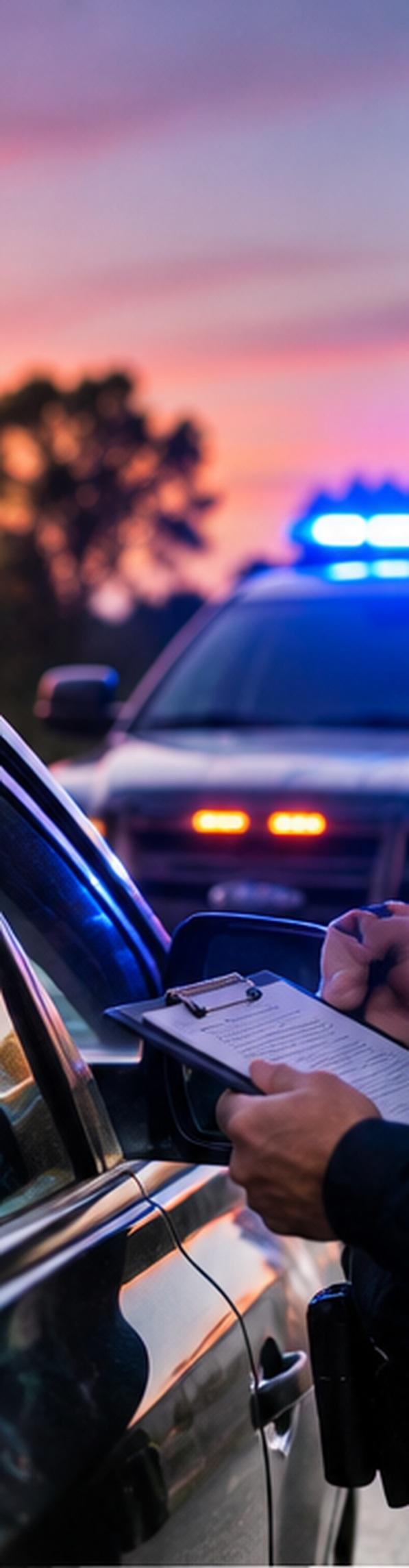
A DWI officer builds evidence in stages. First come observations of the driving and the talk at the window, then the standardized field sobriety tests, and after an arrest a request for a specimen of breath or blood. Each stage produces a different kind of evidence under different rules.
The three standardized tests grew out of research funded by the National Highway Traffic Safety Administration, and officers learn them from the NHTSA manual. The manual says how each test is explained, demonstrated, scored and recorded.
Horizontal gaze nystagmus. The officer moves a pen or small light side to side and watches each eye for an involuntary jerk. The manual lists three clues per eye, six in all.
Walk-and-turn. Nine heel-to-toe steps along a line, a set turn and nine steps back, scored against eight clues such as stopping, stepping off the line or raising the arms.
One-leg-stand. One foot raised about six inches while the person counts aloud for roughly 30 seconds, scored on four clues: swaying, using the arms, hopping and putting the foot down.
The tests are standardized for a reason.
NHTSA ties the meaning of each clue to the test being given the way the manual describes. The instructions, the demonstration, the ground, the lighting, the person's footwear and any medical history all affect whether a score means what the report says it means.
- Did the camera capture the instructions and each test in full
- Was the person asked about eye, inner ear, back or leg conditions
- Was the ground level, dry and reasonably lit
- Was the stimulus held at the distance and speed the manual sets
Texas law does not require anyone to perform these tests, and declining them carries no license suspension. That is different from refusing a breath or blood specimen. Other things an officer notes, such as an odor, speech or red eyes, are observations rather than measurements, and many have innocent explanations.
Testing Rules And Consequences
What Are The Rules For DWI Breath And Blood Tests In Texas?
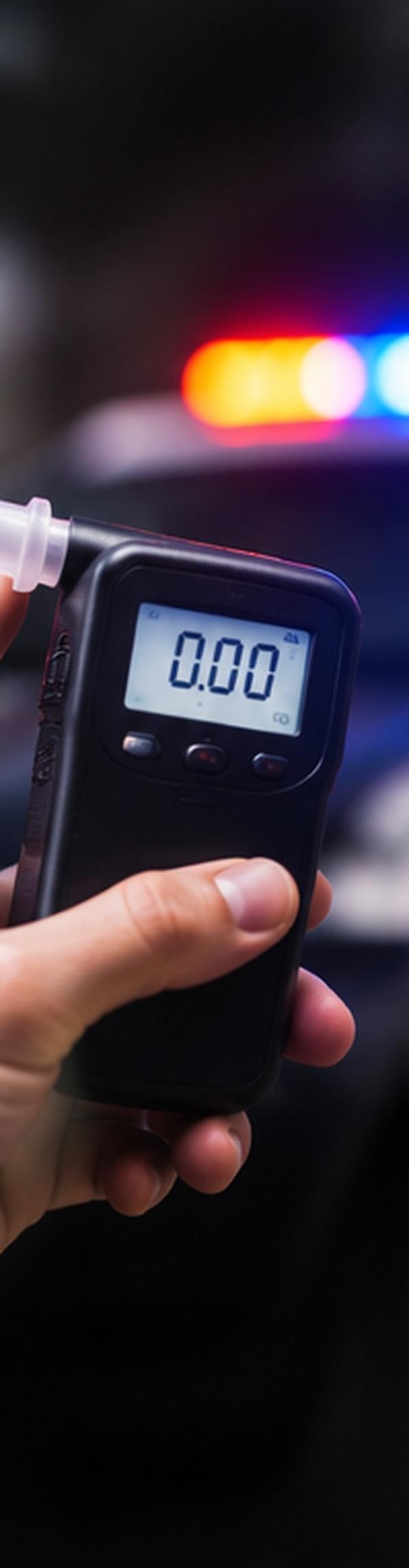
After an arrest the officer reads a statutory warning and asks for breath or blood under the implied consent law, Transportation Code Chapter 724. Which test is used, and how, shapes the evidence the state ends up with. A result is not a punishment by itself, but it feeds both the criminal case and the license case.
So mouth alcohol does not inflate the reading.
Within 0.020 grams per 210 liters of breath.
Section 724.019, by a person the driver chooses.
Two years with a prior enforcement contact.
- Breath instrument
- The Intoxilyzer 9000, run under the DPS breath alcohol testing program (37 Tex. Admin. Code ch. 19). The program certifies the instrument, the operator and the technical supervisor.
- Before the breath test
- The person is watched for 15 minutes so that nothing in the mouth skews the reading.
- Breath samples
- Two valid samples, which have to agree within 0.020 grams per 210 liters of breath.
- Blood analysis
- Gas chromatography in a laboratory, which separates alcohol from other compounds in the sample.
- If a specimen is refused
- A 180 day license suspension, or two years with a prior enforcement contact (§ 724.035), contested at an ALR hearing if one is requested. The refusal can be offered at trial.
- Additional blood test
- A physician, nurse, chemist or qualified technician chosen by the person may take an additional specimen within two hours of arrest (§ 724.019).
These are the rules the statute and the DPS program set. They describe how a test is supposed to be run, not what a particular result will mean.
Real Questions
What Do People Ask About DWI Tests In Texas?
Can I decline the roadside tests and still be arrested?
Is a roadside breath device the same as the Intoxilyzer?
Why does the time of the test matter?
What if a medical condition affected the roadside tests?
What if my blood was drawn at a hospital after a crash?
Where The Evidence Can Break Down
How Can DWI Test Results Be Challenged?
A breath or blood number looks exact on paper. It is the end of a process with written steps, and the records of those steps are evidence too.
For breath, that means the instrument's certification and maintenance logs, the operator's certification, the observation period on video and whether both samples were valid and agreed. The Intoxilyzer measures alcohol in breath and relies on a fixed relationship to blood that does not fit every person.
For blood, it means the affidavit and warrant, who drew the sample and how, the tube and its preservative, storage and transport, the chain of custody and the chromatograms. A chromatogram is the graph the instrument prints as compounds separate, and it is the raw data under the number on the report.
A blood warrant is a document, and documents can be tested.
Blood drawn in a No Refusal period comes with a sworn affidavit, the judge's signature and the time of signing, and a record of who drew the sample. A warrant can be challenged on the affidavit behind it, on how the draw was carried out and on the lab work that produced the number.
Any test shows the concentration at collection, not at the moment of driving. Estimating backward is called retrograde extrapolation, and Texas courts limit when an expert may offer it. Drugs raise different science, because Texas sets no per se concentration for them. The drug DWI page covers that side.
Attorney Brennon Mitchell is an ACS-CHAL Forensic Lawyer-Scientist, with training in the chromatography that labs use on blood. That helps in reading a lab file. It does not settle any one case.
Was The Stop Lawful?
Test results can be challenged when the stop or the detention behind them was not justified.
Was The Manual Followed?
Were the roadside tests explained, demonstrated and scored the way NHTSA training describes?
Was Observation Complete?
Does the video show a full 15 minutes before the breath sample, with nothing in the mouth?
Are The Instrument Records Clean?
Do certification and maintenance records for the Intoxilyzer cover the test date?
Does The Affidavit Show Probable Cause?
Do the facts in the sworn affidavit, standing alone, support the warrant, and do they match the video?
Does The Lab Data Support The Number?
Do the chromatograms, calibrations and chain of custody back the figure on the report?
Local Process
How Do DWI Test Results Get Used In Montgomery County?
Testing follows Texas law across the state. In Montgomery County, a refusal does not always close the door on testing. A driver who refuses a breath test does not end the testing. The officer contacts an on-duty prosecutor who drafts a blood search warrant, an on-call judge reviews it for probable cause, and if signed, blood is drawn by a nurse over the driver's objection.
Arrest And Request
After the arrest the officer reads the written warning and asks for breath or blood. The warning explains what a refusal costs.
Testing
A breath test runs after the observation period. Blood is drawn by consent or under a warrant, and the additional test right can be used within two hours.
Two Cases Use The Result
The result goes to prosecutors in the criminal case and to DPS in the license case, which is decided at an ALR hearing.
Discovery
The defense can ask for the video, instrument records, warrant packet and lab file under Code of Criminal Procedure article 39.14.
- No Refusal periods
- Weekends, holidays and selected enforcement periods, publicized in advance. TxDOT funded, run with the District Attorney's Office.
- Task force periods
- Multi agency DWI task forces run several times a year with seventeen or more participating agencies from Montgomery and Harris Counties.
- Who makes the arrest
- Conroe Police Department, Montgomery County Sheriff's Office, Texas DPS Highway Patrol, Montgomery County Constables, Precincts 1 through 5, Willis Police Department, Shenandoah Police Department, Oak Ridge North Police Department, Magnolia Police Department, Splendora Police Department, and Roman Forest Police Department.
- Where you are booked
- The Montgomery County Jail at 1 Criminal Justice Drive, run by the Montgomery County Sheriff's Office.
- Who relies on the result
- DPS at the license hearing before the State Office of Administrative Hearings. In the criminal case, Montgomery County District Attorney's Office for a misdemeanor and the Montgomery County District Attorney's Office for a felony.
- Where it is filed
- A misdemeanor is filed in one of the Montgomery County Courts at Law. A felony is heard in the district courts at the Montgomery County Criminal Justice Center on 207 W Phillips St.
- If the case is appealed
- Appeals go to the Ninth Court of Appeals in Beaumont.
Next Steps
What Should You Do After A DWI Test?
A test result cannot be redone, but the way it was produced can still be examined. The steps below are general information, not advice for any one person.
Keep Every Document
Save the refusal or consent form, the notice of suspension, the bond papers and any hospital records.
Map The Timeline
Write down when you last ate and drank, when you were stopped and when any test was done.
Remember The 15 Days
The license case has its own deadline, whatever any test showed.
Ask For The Video
Dash, body and booking room video are worth requesting early because retention periods can be short.
Question The Number
A result is one piece of evidence and does not settle the case.
Talk Before Deciding
Hold off on a plea or on letting a deadline pass until the testing records have been reviewed.
A lawyer can request the instrument records, the video, the warrant packet and the lab file, then read them against the rules above. Mitchell Law Firm offers a confidential conversation about a DWI testing issue in Montgomery County, and an early call helps keep the evidence available.
Official Texas Sources
Read The Law Behind This Page
- Texas Penal Code Chapter 49: definition of intoxicated and DWI offenses
- Texas Transportation Code Chapter 724: implied consent, refusals and the additional blood test
- Texas Transportation Code Chapter 524: administrative license suspension
- Texas Code of Criminal Procedure Chapter 18: search warrants
- Texas Code of Criminal Procedure Chapter 39: discovery of the state's evidence
- Texas Department of Public Safety: breath alcohol testing program

Who Handles Your Case
The Texas Lawyer Who Speaks Science
Attorney Brennon Mitchell isn't just a seasoned Conroe trial lawyer. He's one of the few in Texas, and the entire country, to earn the prestigious title of an ACS-CHAL Forensic Lawyer-Scientist. That means he's gone beyond the courtroom and into the laboratory, receiving in-depth, hands-on training in forensic chromatography, the same kind of testing used by crime labs to try and convict Texans every day.
What does that mean for you?
It means when the state uses blood alcohol or drug testing to try to prove its case, Mr. Mitchell knows how to challenge it. He's trained to:
- Analyze lab results and spot faulty science
- Cross-examine forensic experts with precision
- Break down complex chemical evidence in plain language for juries
This is not the kind of background you find in most criminal defense attorneys, and it could make the difference between a conviction and a clean slate.
Brennon graduated from Texas A&M University School of Law and practices from offices in Orange and Conroe.
Client Reviews
What Clients Say About Brennon Mitchell
Prior results do not guarantee a similar outcome. Every case is different and is decided on its own facts.
Related DWI Charges
Other DWI Cases Handled In Conroe, TX
The same tests show up in every DWI file, whatever level the charge is filed at. See the full DWI defense overview for Conroe.
First, Repeat And Felony DWI
Priors never expire in Texas, and a second or third charge moves the case into a different range entirely.
Drug And Substance DWI
You do not need alcohol to be charged. Prescriptions and legal hemp products lead to DWI arrests in Montgomery County.
The Driver And The Vehicle
Age, license type, home state, and what was being operated all change where the same stop leads.
Your License And The Process
The evidence, the deadlines, and what a conviction reaches beyond the courtroom.
Health Care Licenses
Boards that license patient care run their own review of an alcohol arrest, separate from the court.
Other Professional Licenses
Law, finance, aviation, teaching, real estate, and security work each answer to their own board or agency.
Common Questions
DWI Testing Questions People In Conroe Ask
Do I have to do field sobriety tests in Conroe, TX?
Texas implied consent law, Transportation Code Chapter 724, covers specimens of breath and blood. It does not require a driver to perform the roadside balance and eye tests, and no license suspension is tied to declining them. An officer can still arrest on other observations, and the video of the encounter becomes evidence whichever way the driver chooses.
What is a No Refusal weekend in Conroe, TX?
Montgomery County runs a No Refusal program on weekends, holidays and selected enforcement periods, announced in advance and funded by TxDOT. When a driver refuses a breath test in those periods, the officer contacts an on-duty prosecutor who drafts a blood search warrant. An on-call judge reviews it for probable cause, and a signed warrant allows a nurse to draw blood over the driver's objection.
What breath test instrument is used in Montgomery County DWI arrests?
Breath testing in Texas runs on the Intoxilyzer 9000 under the Department of Public Safety breath alcohol testing program, whose rules sit in Title 37 of the Texas Administrative Code, chapter 19. The program certifies each instrument, each operator and the technical supervisors who maintain the instruments, and those records can be requested in the criminal case.
What is the 15 minute observation period before a breath test in Conroe?
Before a breath sample is taken, the operator watches the person for 15 minutes so that food, drink, tobacco or regurgitation does not leave alcohol in the mouth. Mouth alcohol can push a breath reading above the true concentration. The booking room video can show whether the full observation period took place.
Can a blood warrant from a Conroe DWI arrest be challenged?
A blood search warrant rests on probable cause laid out in a sworn affidavit, and the draw and the laboratory analysis each follow their own procedures. The affidavit, the time the judge signed, the record of who drew the blood, the chain of custody and the lab's chromatograms are all records that can be requested and examined in the criminal case.
Can I get my own blood test after a DWI arrest in Conroe, TX?
Transportation Code § 724.019 lets a person who gave a specimen at an officer's request have an additional blood specimen taken by a physician, nurse, chemist or qualified technician of the person's own choosing, within two hours after the arrest. The additional specimen is separate from the state's test, and both can become evidence in the case.
Mitchell Law Firm, PLLC
Every Test Leaves A Record
The breath log, the video and the warrant file show how each test was done. That record is where the review begins.
Conroe Office




