
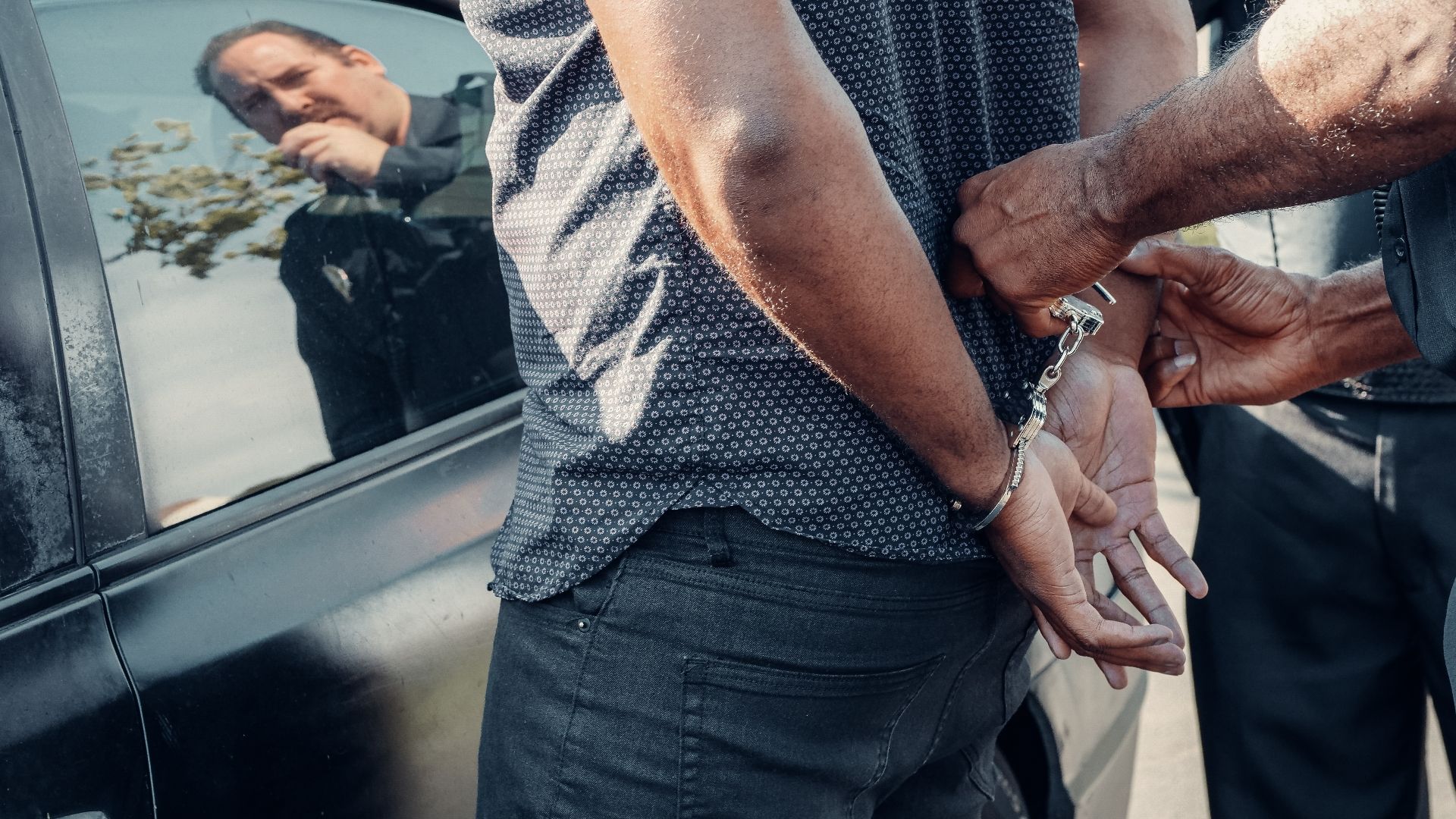
Evading Arrest Lawyer In Conroe, TX
Texas Penal Code § 38.04 grades evading arrest by how a person got away. Running from an officer is a misdemeanor, and driving away is a third degree felony carrying 2 to 10 years, even with no earlier record. This page covers the elements, the levels, the defenses and the process in the county.
What Is Evading Arrest In Texas?
Evading arrest or detention under Texas Penal Code § 38.04 means intentionally fleeing from someone the person knows is a peace officer who is lawfully trying to arrest or detain them. On foot it is a Class A misdemeanor. Using a vehicle or watercraft makes it a third degree felony, and the lawfulness of the stop is an element the state must prove.
Source: Texas Penal Code Chapter 38, Obstruction and Evading
Understanding Texas Law
How Does Texas Law Define Evading Arrest?
Evading is a crime of flight. Under Texas Penal Code § 38.04, a person commits it by intentionally fleeing from someone they know is a peace officer or federal special investigator who is lawfully attempting to arrest or detain them.
Each piece of that sentence is something the state must prove. Intentionally means the person meant to get away. Knew means they understood the pursuer was law enforcement. Lawfully means the officer had a legal basis for the stop or arrest to begin with.
Knowledge is where many cases start. An unmarked unit at night, an officer in plain clothes, or a siren that came on late can all leave room to ask what the person actually understood when they kept going.
What the state must prove beyond a reasonable doubt:
- The person intentionally fled
- The person knew the pursuer was a peace officer or federal special investigator
- The officer was attempting lawfully to arrest or detain the person
- For a felony level, that a vehicle or watercraft was used, or that serious injury or death resulted
One statute runs from a misdemeanor to a second degree felony:
- Class A misdemeanor: flight on foot, with no earlier evading conviction
- State jail felony: flight on foot after a prior conviction under § 38.04
- Third degree felony: flight in a vehicle or watercraft, or flight during which another person suffers serious bodily injury as a direct result of the officer's attempt to catch the person
- Second degree felony: another person dies as a direct result of that attempt
The vehicle level surprises people. A driver with a clean record who does not pull over faces a felony indictment on a first offense. Section 38.04 also has separate levels for using a tire deflation device against a pursuing officer.

Penalties And Consequences
What Are The Penalties For Evading Arrest In Texas?
One statute can produce a misdemeanor or a second degree felony. These are statutory limits, not predictions of what will happen in any one case.
A year in county jail at most, with a fine capped at $4,000.
A range of 2 to 10 years, plus a fine of up to $10,000.
A range of 2 to 20 years, plus a fine of up to $10,000.
- On foot, first offense
- Class A misdemeanor. Up to one year in county jail and a fine of up to $4,000.
- On foot, prior evading conviction
- State jail felony. 180 days to 2 years in a state jail facility and a fine of up to $10,000.
- Vehicle or watercraft
- Third degree felony. 2 to 10 years in prison and a fine of up to $10,000.
- A death results
- Second degree felony. 2 to 20 years in prison and a fine of up to $10,000.
- Deadly weapon finding
- Available to the state on a felony case when the vehicle was used in a way capable of causing death or serious bodily injury. It limits judge-ordered community supervision and delays parole eligibility.
- Record
- A felony conviction is a permanent public record and can affect firearm rights, work and licensing.
Evading rarely comes alone. A pursuit can add charges for the reason of the stop, such as a DWI, drug possession or a crash.
Real Questions
What Do People Ask About Evading Arrest In Texas?
Is driving away from a stop always a felony?
Does the stop have to be lawful for the charge to hold?
What if I drove a short way to a safer place before stopping?
What if I ran after the car stopped?
Can an evading charge be reduced?
Possible Defenses
How Can Evading Arrest Be Defended?
Because § 38.04 requires an officer "attempting lawfully to arrest or detain," the basis for the stop is an element of the offense and not just a pretrial issue. That puts the opening seconds of the encounter under review.
An attorney studies the video, the report and the scene to see what the state can prove. No result can be promised.
The timeline tells the story of a pursuit.
Patrol and body camera video can show when emergency lights and siren came on, how the driver reacted, and how far and how fast the vehicle moved. Dispatch logs and 911 audio can be set against the written report.
With so many agencies working in the county, one pursuit can involve officers and video from more than one department, and each keeps its own records.

The Reason For The Stop
What violation or suspicion did the officer rely on to start the stop?
Knowledge Of An Officer
Could the driver see or hear that a peace officer was signalling?
Intent To Flee
Does the evidence show deliberate flight, or a delay in finding a safe place to stop?
Who Was Driving
Can the state prove who was behind the wheel, not just whose vehicle it was?
Deadly Weapon Allegation
Is the finding backed by how the vehicle was actually driven?
Injury Or Death
Did any injury result directly from the officer's attempt to apprehend the person?
Local Process
What Happens After An Evading Arrest In Montgomery County?
The level of the charge decides which court hears the case and whether a grand jury is involved.
Booking And Magistration
After arrest the person is booked at the county jail and taken before a magistrate, who sets bond. A vehicle case is treated as a felony from that first appearance.
Grand Jury Review
The District Attorney's Office presents a felony evading case to a Montgomery County grand jury, which decides whether to indict. A foot case goes forward on a misdemeanor complaint and information instead.
Discovery
The defense can ask for the state's evidence, including pursuit video and radio traffic, under Code of Criminal Procedure art. 39.14.
Court Settings
The case is set for hearings and then a plea, a dismissal or a trial.
- Misdemeanor court
- A foot case is filed in one of the Montgomery County Courts at Law and prosecuted by Montgomery County District Attorney's Office.
- Felony court
- A felony case is heard in the district courts at the Montgomery County Criminal Justice Center on 207 W Phillips St, at 207 W Phillips St, and prosecuted by the Montgomery County District Attorney's Office.
- Pursuing agency
- Conroe Police Department, Montgomery County Sheriff's Office, Texas DPS Highway Patrol, Montgomery County Constables, Precincts 1 through 5, Willis Police Department, Shenandoah Police Department, Oak Ridge North Police Department, Magnolia Police Department, Splendora Police Department, or Roman Forest Police Department. A pursuit can cross from one agency's area into another's.
- Where you are booked
- The Montgomery County Jail at 1 Criminal Justice Drive, run by the Montgomery County Sheriff's Office.
- If the case is appealed
- the Ninth Court of Appeals in Beaumont.
A pursuit seldom produces one count. The same drive can be charged as reckless driving, and whatever led to the stop stays on the table, such as a suspected DWI, a warrant, or items found in the vehicle. A crash with injuries can add its own charges. When a deadly weapon finding is entered on a felony evading judgment, the probation and parole limits on the 3g offenses page come into play.
Next Steps
What Should You Do After An Evading Arrest Charge?
These steps are general information, not advice for any one person.
Do Not Discuss The Pursuit
What you say about whether you saw the lights can become key evidence.
Note Where And When
Write down where the stop began and what you saw and heard.
Move Fast On Video
Patrol and body camera video can be overwritten, so speak to a lawyer promptly.
Keep Court Papers
Save the bond, any warrant and every notice.
Check For Other Charges
Find out what else was filed from the same event.
Avoid Social Media
Do not post about the stop or the pursuit.
Speak with an attorney before you decide anything. A call to Mitchell Law Firm about an evading arrest charge in Montgomery County is confidential, and an early request for the video keeps more of it available.
Official Texas Sources
Read The Law Behind This Page
- Texas Penal Code Chapter 38: Evading arrest or detention and resisting arrest
- Texas Penal Code Chapter 12: Punishment for misdemeanors and felonies
- Texas Penal Code Chapter 1: Definitions, including serious bodily injury and deadly weapon
- Texas Transportation Code Chapter 545: Rules of the road
- Texas Code of Criminal Procedure Chapter 14: Arrest without warrant
- Texas Code of Criminal Procedure Chapter 39: Discovery of the state's evidence

Who Handles Your Case
The Texas Lawyer Who Speaks Science
Attorney Brennon Mitchell isn't just a seasoned Conroe trial lawyer. He's one of the few in Texas, and the entire country, to earn the prestigious title of an ACS-CHAL Forensic Lawyer-Scientist. That means he's gone beyond the courtroom and into the laboratory, receiving in-depth, hands-on training in forensic chromatography, the same kind of testing used by crime labs to try and convict Texans every day.
What does that mean for you?
It means when the state uses blood alcohol or drug testing to try to prove its case, Mr. Mitchell knows how to challenge it. He's trained to:
- Analyze lab results and spot faulty science
- Cross-examine forensic experts with precision
- Break down complex chemical evidence in plain language for juries
This is not the kind of background you find in most criminal defense attorneys, and it could make the difference between a conviction and a clean slate.
Brennon graduated from Texas A&M University School of Law and practices from offices in Orange and Conroe.
Client Reviews
What Clients Say About Brennon Mitchell
Prior results do not guarantee a similar outcome. Every case is different and is decided on its own facts.
Related Traffic Charges
Other Criminal Traffic Charges In Conroe, TX
A traffic stop that turns into a pursuit can leave a driver facing several charges from a few minutes of driving. See the full Traffic Violations defense overview for Conroe.
Failure To Stop And Give Information
Driving away from a collision that damaged a vehicle without leaving the required information. A jailable misdemeanor at $200 in damage.
Failure To Stop And Render Aid
Leaving a crash where someone was hurt or killed. Charged under § 550.021, from a five year offense up to second degree.
Reckless Driving
Driving with wilful or wanton disregard for safety under § 545.401. A jailable misdemeanor, filed as a criminal case.
Street Racing
Charged as racing on a highway under § 545.420. A misdemeanor at first, with an impound at arrest and a one year suspension on conviction.
Street Racing With Bodily Injury
An injury turns a racing misdemeanor into a felony under § 545.420: third degree for bodily injury, second degree for serious injury or death.
Common Questions
Evading Arrest Questions People In Conroe Ask
What is the punishment for fleeing police in a vehicle in Conroe, TX?
Fleeing from a peace officer in a vehicle or watercraft is a third degree felony under Texas Penal Code § 38.04, with 2 to 10 years in prison and a fine of up to $10,000. No earlier conviction is needed for that level. If another person dies as a direct result of the officer's attempt to apprehend, the offense becomes a second degree felony.
Is running from an officer on foot a felony in Montgomery County?
On foot, evading is a Class A misdemeanor under § 38.04, with up to one year in county jail and a fine of up to $4,000. A prior conviction under the same section raises a foot case to a state jail felony, which carries 180 days to 2 years in a state jail facility.
Where is an evading arrest case heard in Conroe, TX?
A misdemeanor evading case is filed in one of the Montgomery County Courts at Law. A vehicle case is a felony, so it goes to a grand jury and, if indicted, to a district court at the Criminal Justice Center on 207 W Phillips St, where the District Attorney's Office prosecutes it. Misdemeanor and felony courts are in different buildings.
Must the officer be acting lawfully in a Montgomery County evading case?
Section 38.04 applies only to flight from an officer who is attempting lawfully to arrest or detain the person. That makes the legality of the stop an element the state must prove at trial, not only an issue for a motion to suppress. Without reasonable suspicion or probable cause for the detention, that element is not met.
Can a vehicle be treated as a deadly weapon in a Conroe evading case?
Texas law allows a motor vehicle to be found a deadly weapon when the way it was used or meant to be used was capable of causing death or serious bodily injury. On a felony evading conviction, that finding limits a judge's power to grant community supervision and delays parole eligibility, so it is contested separately from guilt.
What if I did not notice the police lights in Conroe, TX?
Knowledge is an element. The state must show the person knew the pursuer was a peace officer and chose to flee. Video can show when lights and siren came on, how far the vehicle travelled and whether the driver could see or hear them. A driver who never realized an officer was signalling stands in a very different place from one who saw it and kept going.
Mitchell Law Firm, PLLC
The Video Starts Before The Lights Do
Dash camera footage, radio traffic and dispatch logs record how an evading case began. The earlier they are reviewed, the more options remain open.
Conroe Office




